
The Eightfold Fence
These G Notes don't follow a particular order but, considering the 18 awards that the tv series "Shogun" won on the most recent Emmys' ceremony, it seemed like a good time to publish some relevant notes about it. I had already mentioned "Shogun" on my IG Stories and recommended it on the G Studio newsletter, a few months ago. But don't worry, I won't be repeating myself. The purpose of these G Notes, is to dive a little deeper. So, let's jump in...
In a world that is so standardised and where things are too familiar, wether you're in Europe, Africa, Asia or in the Americas, it's interesting that some ancient rites and habits are still embed in certain cultures.
Japan is one of those cases and I guess that's one of the reasons why my western mind finds its culture so exquisite and even somewhat exotic. They are probably one of the best examples of a people who managed to preserve habits coming from a culture with more than a thousand years.
So, whenever there's an historical movie or tv series that's set on Japan or China, I tend to watch it. And the most recent one was "Shogun".
The series focuses on the internal disputes in feudal Japan during the Discoveries period and also on the arrival of the first British sailor to the land of the rising sun and the cultural clash between Western and Eastern cultures. I found fascinating the way they portrayed the extreme reverence and respect for their rulers and the focus on ancient Japanese rites and traditions like the tea ceremony, the haiku poetry and even the seppuku.
But what led me to the present reflection was "The Eightfold Fence" principle, mentioned on one of the episodes. The scene is beautifully filmed, but let's focus on the concept itself.
In a nutshell, "The Eightfold Fence" principle is a coping mechanism that allows people to compartmentalise their emotions in order to preserve their identity and beliefs, while they navigate their daily personal and professional obligations and challenges.
There seems to be some correlation with what the Stoics used to say in their amor fati principle, which affirmed that things should not be seen as good or bad, they just are.
But while the writings of the Stoics that we have access nowadays, show a more pragmatic approach, these ancient Japanese principles seem to me a bit more complex and even poetical. Here's a beautiful example from an episode of "Shogun":
"You can listen to the sound of a blossom falling or the rocks growing. If you really listen, your present circumstance vanishes."
This Japanese eightfold fence metaphor is also entwined with other ancient habits. Practices that nowadays we would call mindfulness exercises, such as meditation. For this eightfold principle consists on creating a mental space of peace and consciousness where one can retain control over themselves in tough situations. To get to this point, this principle underlines the importance of listening, paying attention to details and attune to the subtleties of existence.
In practical terms, the episode where this principle is mentioned also provides a good example, when the Japanese character cautions the British foreigner for being to haste in judging them:
"Do not be fooled by our politeness, our bows, our maze of rituals. Beneath it all, we could be a great distance away. Safe... and alone. "
Another interesting thing is the possible correlation with the Eightfold Path, one of the central pillars of Buddhism. I should note that this is just me making this correlation. I don't have any basis to make this connection, besides having dissected both concepts.
The Eightfold Path or the Noble Path, as it is also known, is a Buddhist teaching that outlines the path to deal with life's challenges. This principle is usually represented by a wheel, with eight lines connected in the center. They all work together and knowing how to operate them, is what helps us follow a more peaceful path. These eight elements are:
View - having a correct understanding of the Four Noble Truths and understanding that all our actions have consequences (in other words, karma);
Intention - cultivating and practicing goodwill, and harmlessness towards ourselves or others;
Speech - refraining from lies, false or harmful words;
Action - refraining from violent or harmful actions towards ourselves or others;
Livelihood - earning a living through ethical means;
Effort - making a diligent effort to nurture the qualities of the mind and beneficial behaviours;
Mindfulness - maintaining present-moment awareness and observation of one's body, feelings and thoughts;
Concentration - developing focusing skills, which lead to states of tranquility;
These eight elements have no particular order as their are all interconnected and according to Buddhists, are quintessential not only to a peaceful life but also to deal with the challenges in our way.
Maybe I got a bit carried away by this particular episode of “Shogun” and although this is just a tv series, I like the idea that there's always something we can learn from entertainment shows. Sometimes it will be some good laughs, sometimes it will be excitement from action scenes and sometimes… it can go way deeper, with a meaningful impact in our lives and potentially in the lives of others - just like I mentioned in the previous G Note - "Red bill, Blue pill".
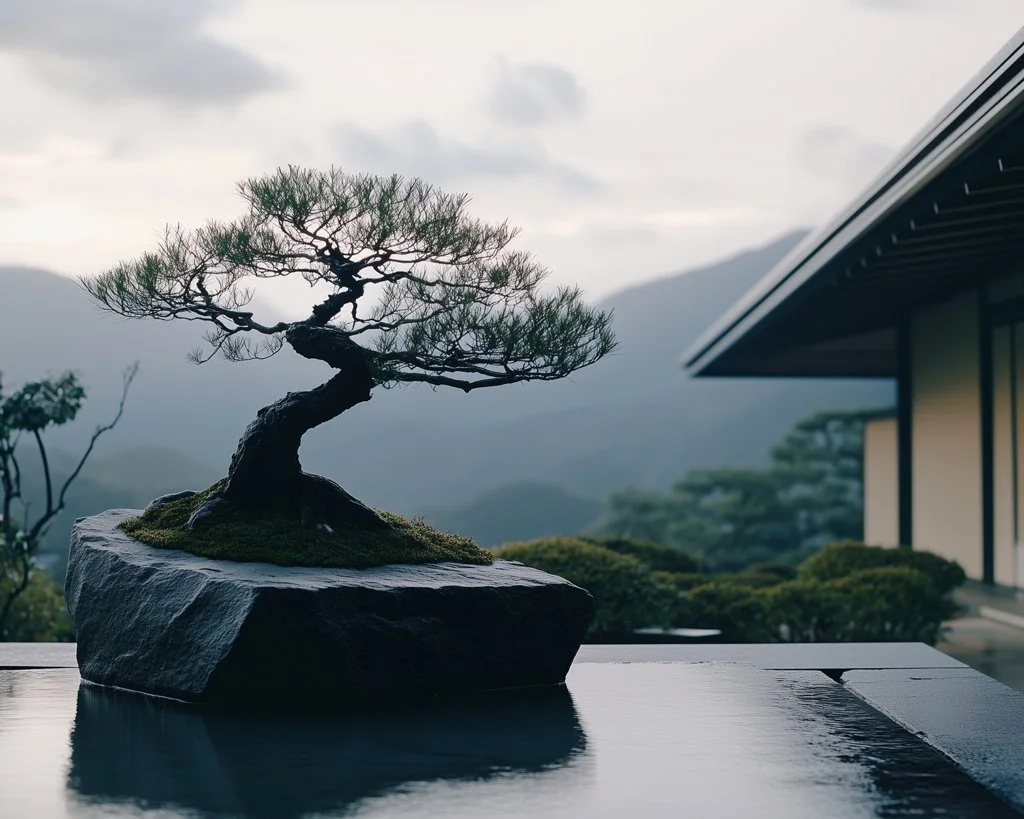
image created with A.I. / © Gonçalo M. Catarino
G Notes merged with GStudio’s newsletter on December 2025. If you’d like to get future posts like this in your inbox, please drop your email at: